
Simulation Games & Facilitator Guide For Youth Workers

The simulation games were created within the Erasmus+ project CHECKMATE – Living Labs and Game-Based Learning to Checkmate Climate Misinformation, project number 2024-2-LV02-KA220-YOU-000266268. The guide was developed to provide youth workers with practical, ready-to-use educational tools that combine climate education, media literacy, and experiential learning through immersive simulation-based methods.
The CHECKMATE Facilitator Guide is a practical educational resource designed for youth workers, trainers, educators, and facilitators who want to engage young people in critical discussions around climate misinformation, decision-making, and democratic participation. The guide combines four ready-to-use simulation games with facilitation guidance, debriefing frameworks, and educational background to support impactful non-formal learning experiences
The simulations immerse participants in realistic climate dilemmas where they take on stakeholder roles, navigate conflicting perspectives, analyse information, and experience how misinformation, disinformation, and malinformation can influence public opinion and decision-making. Rather than passive learning, participants actively negotiate, debate, question evidence, and reflect on how information shapes real-world choices.
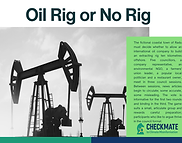
A council-chamber simulation about offshore drilling, economic pressure, and the slow drift of public opinion under a barrage of news.

A four-dimension stakeholder simulation about an airport in a protected forest, the politics of green growth, and the secret interests behind every public position.

A four-group simulation based on the misinformation typology, featuring groups for truth, disinformation, misinformation, and malinformation.

An investigative simulation involving a poisoned lake, six interconnected factions with secret alliances and shared guilt, and a town seeking to identify the culprit.
WHY USE THE SIMULATION GAMES?
Young people are increasingly exposed to emotionally charged narratives, misleading climate claims, and polarised debates online. Traditional educational methods often explain misinformation theoretically, but simulation games allow participants to experience these dynamics first-hand.
The simulation games help because they:
-
Strengthen critical thinking and media literacy skills
-
Build awareness of misinformation, disinformation, and malinformation
-
Encourage teamwork, negotiation, and strategic decision-making
-
Help participants understand complex sustainability trade-offs
-
Create empathy by exploring different stakeholder perspectives
-
Make abstract policy and climate debates tangible and engaging
-
Support youth workers with structured, ready-to-use facilitation methods
WHAT DOES THE GUIDE INCLUDE?
The Facilitator Guide includes:
-
4 complete ready-to-use simulation games
-
Step-by-step facilitation guidance
-
Educational background on climate misinformation and media literacy
-
Practical preparation and session management tips
-
Structured debriefing frameworks and reflection tools
-
Printable role materials and game resources
THE FOUR SIMULATION GAMES INCLUDED ARE:
-
Oil Rig or No Rig – a council-style debate on offshore oil drilling
-
To Build or Not to Build – a multi-stakeholder negotiation on airport construction in a protected area
-
The Electric Shift – a policy simulation on banning fossil-fuel vehicles
-
Shadows of the State – an investigative simulation exploring systemic environmental responsibility
WHO IS THIS RESOURCE FOR?
The guide is designed for:
-
Youth workers, facilitators, and educators working with young people aged 16+
-
Schools, youth centres, NGOs, and training organisations
-
Erasmus+ youth exchanges and training courses
-
Climate education and media literacy initiatives
-
Groups exploring civic participation, democratic dialogue, and sustainability decision-making
WHAT DO PARTICIPANTS LEARN?
Through the simulation games, participants develop competences such as:
-
Critical evaluation of information and persuasive narratives
-
Recognition of misinformation, disinformation, and malinformation
-
Strategic communication and negotiation skills
-
Democratic participation and collaborative decision-making
-
Empathy and understanding of competing stakeholder interests
-
Climate literacy and systems thinking
-
Responsible digital citizenship and fact-checking habits
APPROACH:
The CHECKMATE Simulation Games are based on participatory and experiential non-formal education methods, including:
-
Role-play and simulation-based learning
-
Debate and collaborative negotiation
-
Media literacy and misinformation analysis
-
Reflection and debriefing-based learning
-
Critical questioning and evidence-based discussion
Funded by the European Union. Views and opinions expressed are however those of the author(s) only and do not necessarily reflect those of the European Union or the European Education and Culture Executive Agency (EACEA). Neither the European Union nor EACEA can be held responsible for them.

